
Project Type
B2B SaaS · CRM Platform · Enterprise UX
Role
Product Designer (UX)
Platform
Inresto Campaigns (part of the Dineout–Inresto product suite)
Target Users
Restaurant Brand Managers, Ops teams, Customer support teams, Marketing & Growth Teams

Overview
Inresto is a restaurant technology platform powering CRM, reservations, payments, and operations for leading restaurant and delivery chains in India. However, its order management experience was not designed for fast-paced environments that require real-time decisions and operational clarity. This project focused on redesigning the order dashboard to streamline workflows across delivery, takeaway, curbside, and dine-in, enabling teams to manage orders faster, reduce errors, and operate with greater confidence.
The Problem
Restaurant brands using Inresto CRM struggled with:
-
A fragmented order management experience that made it hard to track delivery, takeaway, curbside, and dine-in tickets in one place
-
Complex workflows for accepting orders, assigning riders, selecting billing methods, and updating statuses
-
Limited visibility into order stages, making prioritization and real-time decision-making difficult
-
Layered information architecture that slowed access to critical item and order detailsInconsistent
-
UI patterns that increased the learning curve and cognitive load
As a result:
-
Orders were delayed, missed, or prone to operational errors
-
Staff relied on manual coordination and workarounds during peak hours
-
Team efficiency dropped in high-volume situations
-
Confidence in the system weakened, reducing overall operational trust
💡 This wasn’t a lack of features, it was a UX clarity and system design problem.
Design Goals
-
Create a unified command center: Design a centralized dashboard that categorizes orders by type while allowing teams to view or manage all tickets from one place.
-
Improve real-time visibility: Enable quick filtering and stage-based navigation (Accepted, Prepared, Dispatched, Delivered) so staff can instantly understand order status and priorities.
-
Reduce cognitive load: Surface the most relevant order details through thoughtfully designed cards and flexible list views to support faster decision-making.
-
Streamline critical workflows: Simplify actions like accepting orders, editing rider details, selecting billing methods, and updating statuses to minimize friction.
-
Support operational efficiency at scale: Allow bulk actions, outlet switching, and the ability to pause incoming orders to help teams stay in control during high-volume periods.
-
Increase system trust: Build predictable, transparent flows with notification indicators and clear closures so teams can rely on the platform without second-guessing outcomes.
The Solution
Designed a responsive order management dashboard optimized for both mobile and web breakpoints, ensuring critical information remains accessible and actionable across devices. Prioritized adaptive layouts, clear hierarchy, and touch-friendly interactions to support fast, real-time decision-making in high-pressure environments.
Inresto CRM App Design
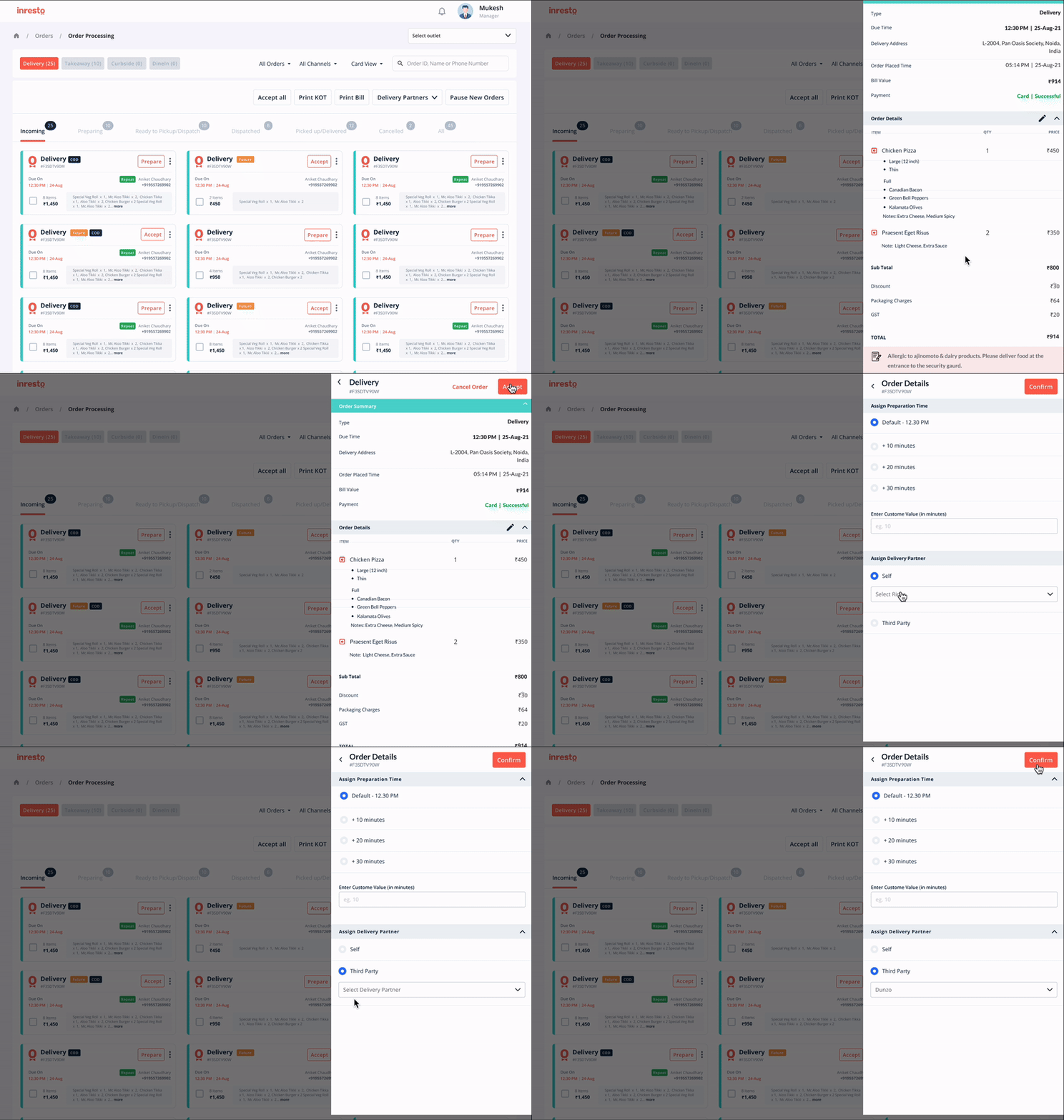
Inresto CRM Desktop Design (Accept Flow)
Key Design Decisions
1. Unified Order Dashboard
-
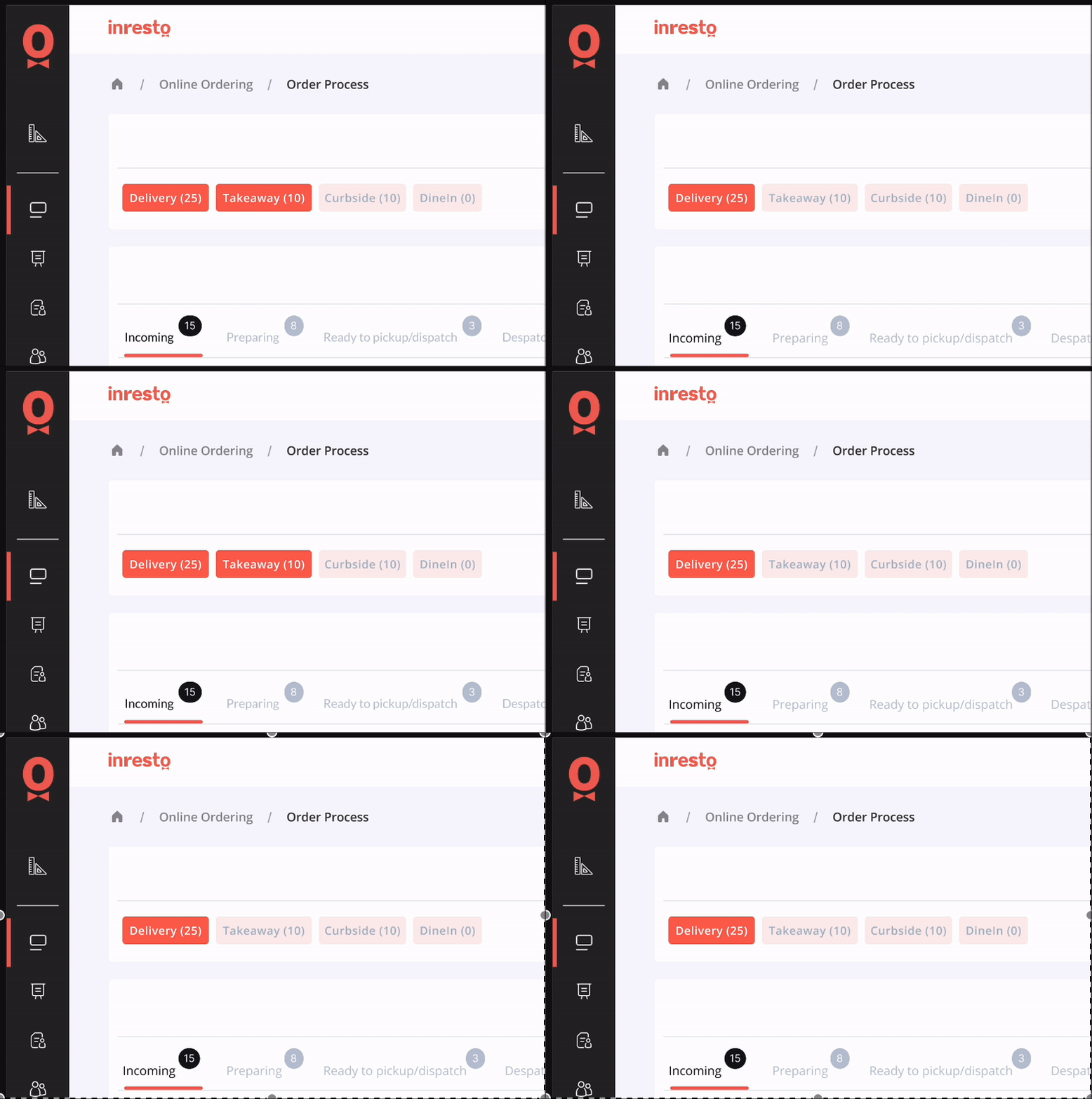
Design Decision: Created a centralized dashboard that consolidates all orders while categorizing them into Delivery, Takeaway, Curbside, and Dine-in.
-
Rationale: A single command center improves situational awareness, reduces navigation effort, and helps teams manage high volumes more efficiently.
2. Stage-Based Navigation with Real-Time Counts
-
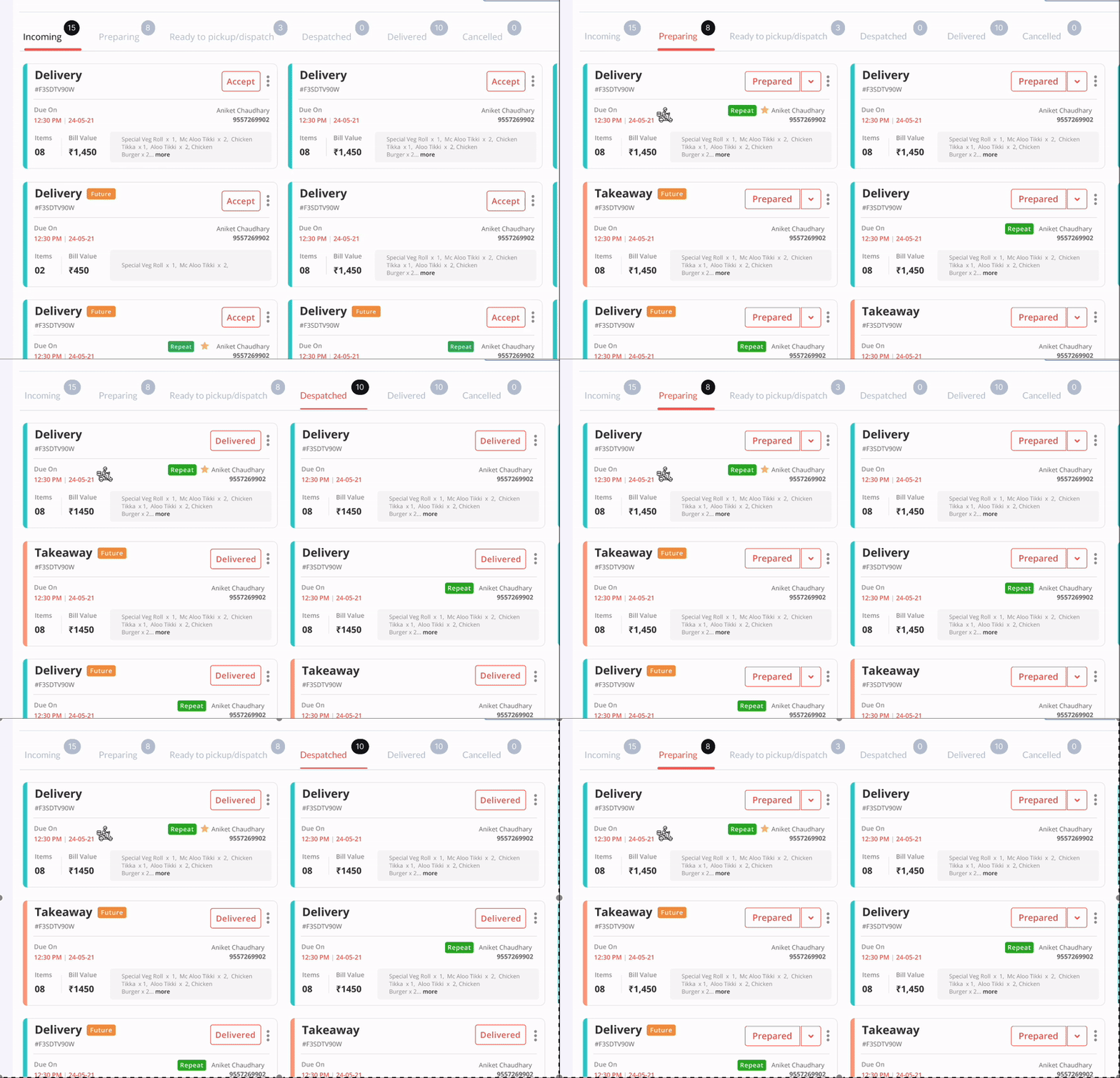
Design Decision: Introduced a top navigation bar with stages (Accepted, Prepared, Dispatched, Delivered) and live ticket counts for quick filtering.
-
Rationale: Clear status visibility enables faster prioritization, prevents bottlenecks, and supports real-time decision-making.
3. Streamlined Order Acceptance Flow
-
Design Decision: Simplified the acceptance journey, allowing users to quickly accept tickets, assign riders (in-house or third-party), edit details, and select billing methods in one flow.
-
Rationale: Reducing steps in critical workflows minimizes errors and ensures orders move smoothly through the pipeline.
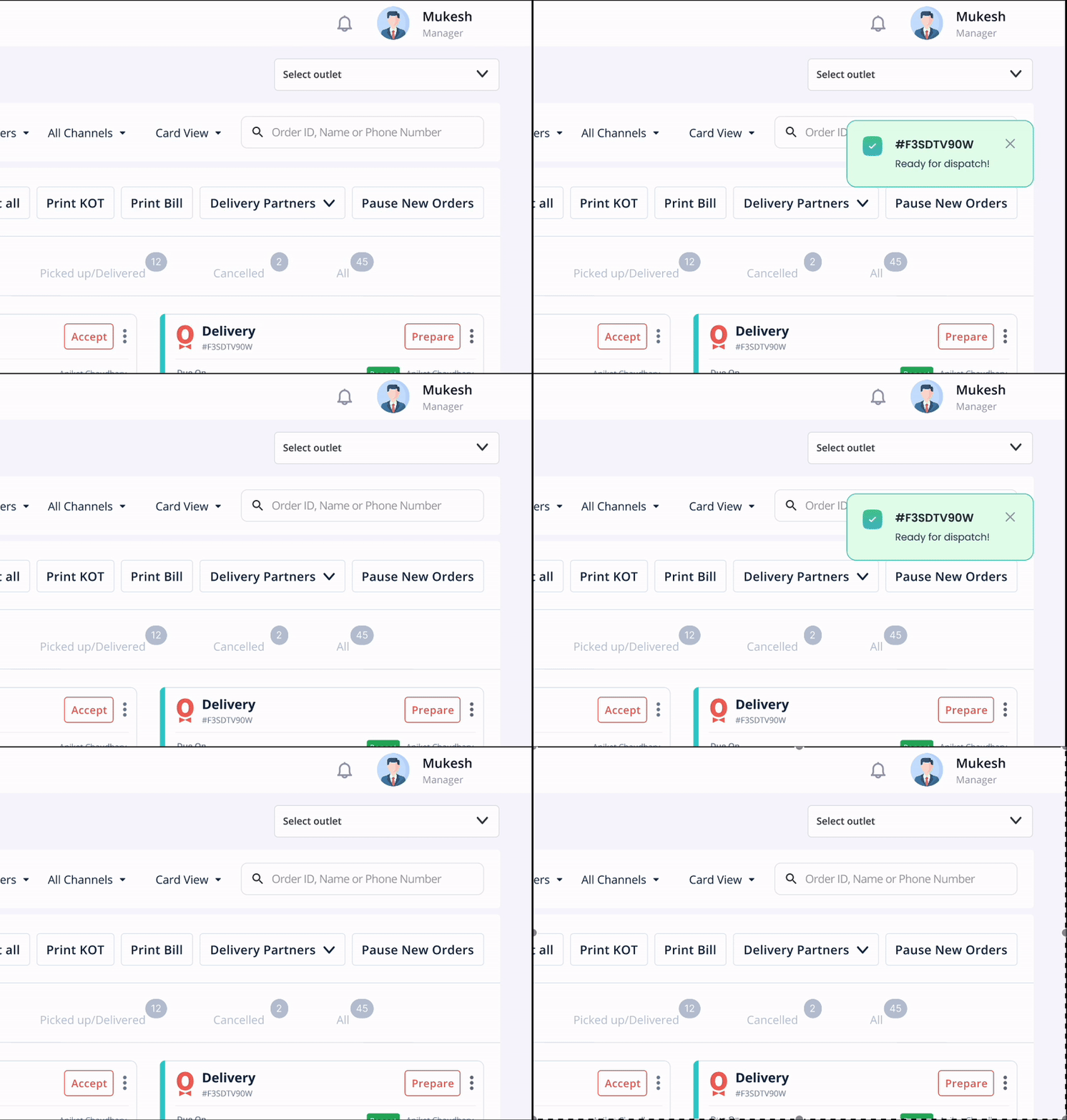
4. Real-Time Status Updates with Close Indicators
-
Design Decision: Enabled seamless status transitions (Prepared → Dispatched → Delivered) with notification indicators prompting users to close tickets.
-
Rationale: Visible progress and clear completion signals improve accountability and prevent operational gaps.
5. Bulk Actions & Operational Controls
-
Design Decision: Added multi-select for batch edits, the ability to pause incoming orders, switch outlets, and quickly modify order details.
-
Rationale: Supporting high-volume workflows increases operational agility and keeps teams in control during rush periods.


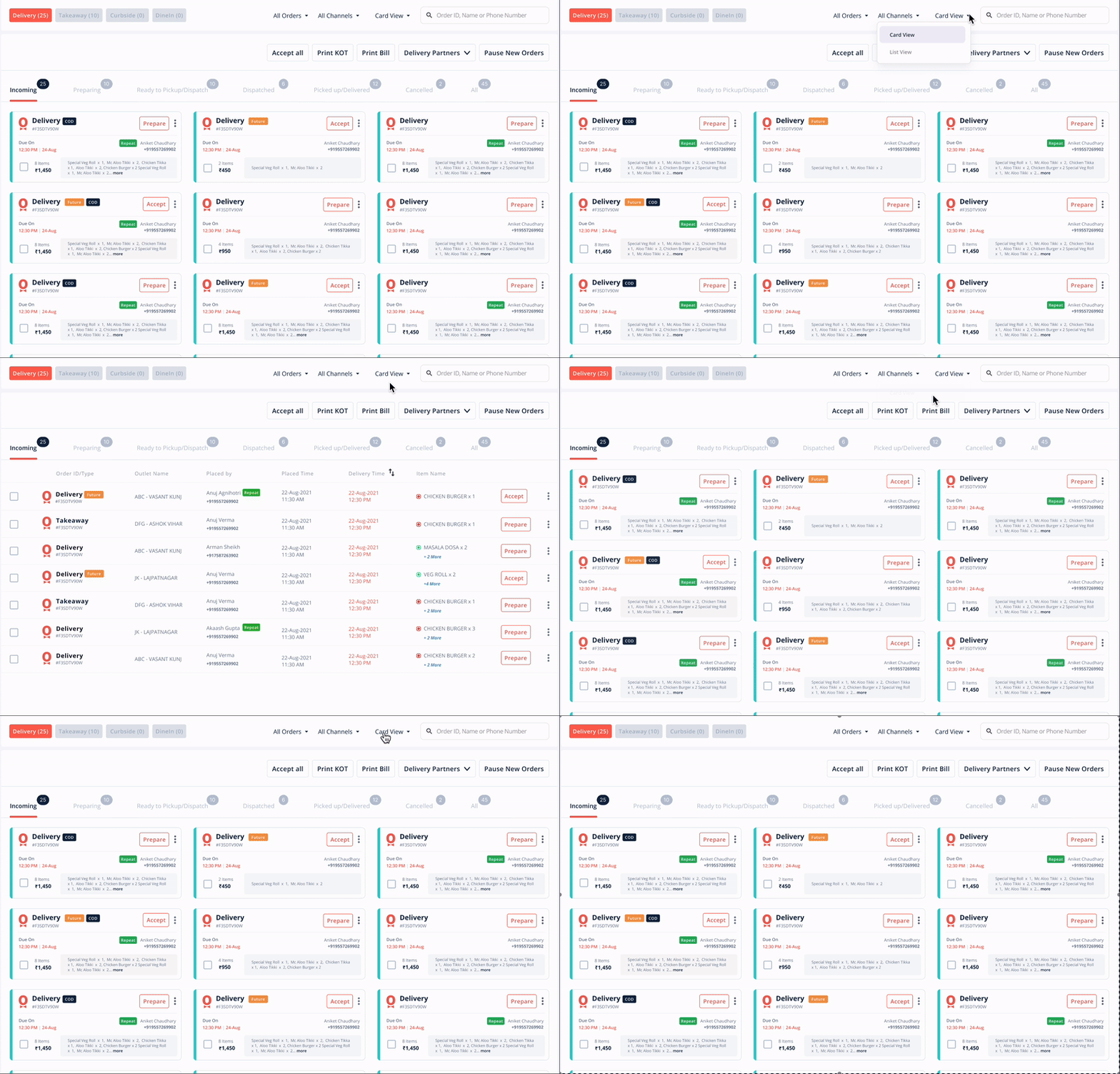
6. Flexible Card and List Views
-
Design Decision: Designed both card and list views so teams can choose the format best suited to their workflow.
-
Rationale: Flexibility enhances efficiency by allowing users to adapt the interface to their mental model and working style.
7. High-Clarity Order Card Design
-
Design Decision: Crafted order cards to surface the most relevant details upfront while maintaining visual hierarchy.
-
Rationale: Prioritized information reduces mental effort, accelerates comprehension, and enables faster actions in time-sensitive environments.


Old Card
New Card Design
Outcome & Impact
What This Project Demonstrates
-
Faster order management and improved operational efficiency, especially during peak hours
-
Clear status visibility enabling quicker prioritization and decision-making
-
Reduced cognitive load with critical information surfaced upfront
-
Standardized workflows increasing trust and reliability
-
Scalable design system for future features
-
Workflow & interaction design for complex, multi-stage processes
-
Systems thinking and consistent UI patterns
-
Information architecture for clarity and speed
-
Problem framing and designing for real-world constraints
-
Strategic product thinking to improve efficiency, trust, and scalability
Final Reflection
This project reinforced a core belief in my design practice:
In enterprise products, users don’t need more power; they need confidence that the power will behave as expected.
By redesigning Inresto CRM around transparency, edge cases, and system clarity, the platform became easier to use, easier to trust, and easier to scale.